The Revival Of Travertine – From Ancient Roman Architecture To Contemporary Homes, Explore The Enduring Warmth Of Travertine.
Travertine is a natural stone that has been used by interior designers for centuries. The unique character of travertine offers an elegant charm and organic movement for a timeless appeal. Here are a few things you should know about Travertine before using this one of a kind natural stone in your home.

WHAT IS TRAVERTINE
Travertine is one of the most used natural stones in ancient architecture, one example being the Colosseum which is built almost entirely out of travertine. At its roots, travertine is a variety of limestone, shaped by mineral deposits in natural springs. Travertine is largely quarried in Italy, but can also be found in other parts of the world including Europe, Asia, and even some parts of the US.
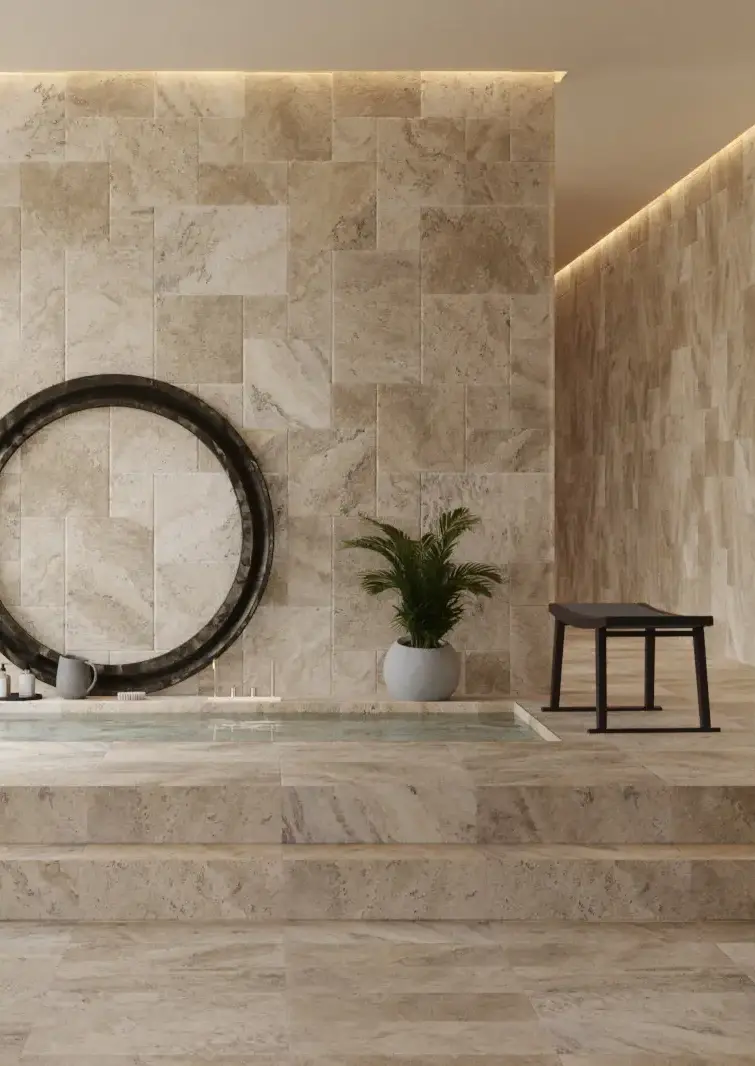
Exhibiting unique movement and depth, travertine is the perfect complement to both formal and casual design styles. Today, natural stone is a common material used in residential and commercial interiors, and is used by interior designers all over the world. Travertine is an extremely versatile material and can be used on many applications such as walls, floors, countertops, outdoor pavers, decorative mosaic, fireplace cladding, and more. Natural stone has its pros and cons, but overall offers a beautiful and unique charm to any space.

DURABILITY
While not as hard as other stones such as marble or granite, travertine is an extremely durable material. Looking back again to ancient architecture and european buildings still standing today, travertine has proved to withstand heavy foot traffic and daily wear. This natural stone can also withstand extreme temperatures and isn’t likely to crack under high heat or winter weather.
Although this is a durable material, you should still treat it with care to avoid unnecessary damage and ensure the longevity of the stone. Scratches and chips are not likely but can still occur when a heavy object is dropped or a sharp piece of furniture is dragged. These damages however do not appear in that same fashion as they would on a material such as porcelain or ceramic. This is because the natural fissures and variation in the travertine stone help to hide these damages in the natural imperfection of the stone.
Travertines natural durability makes it suitable for a wide variety of applications including outdoor finishes. Often used for pool decks, patios, and walkways, travertine can withstand weather elements and foot traffic making it a great option for both indoor and outdoor applications.
NATURAL BEAUTY & VARIATION
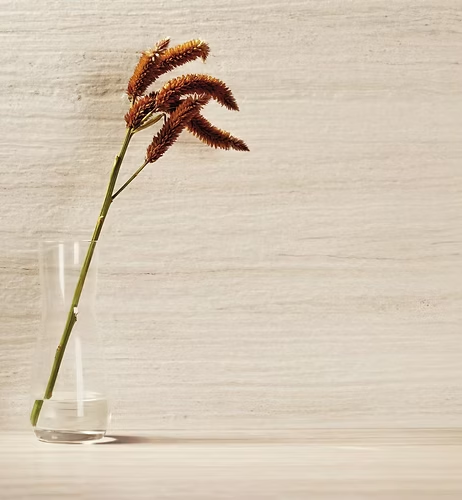
Like any natural stone, travertine develops a natural patina over time, and creates a beautiful, lived-in aesthetic for a variety of applications. The natural beauty of stone includes variation in tones and textures, and each piece offers a unique look with distinctive veining and fissures. Travertine includes small indentations not found in traditional stones such as marble. These imperfections give a more rustic and organic appearance, and are a part of what makes travertine so unique and charming.
Travertine is filled with earthy neutral tones including ivory, beige, and brown, that highlight the organic movement found flowing through the stone. unlike other popular natural materials such as marble or granite, you won’t find bold veining or large, rock-like formations in travertine. Instead, travertine offers a softer, fluid pattern that creates a subtle and tonal design bringing movement, depth, and soft elegance to any space.
The authenticity of travertine is what has made this natural stone such a popular material for hundreds of years. Travertine is used today to connect nature with interiors, and offers an opportunity to bring history into design.

MAINTENANCE
It is important to take care of the materials and finishes in your home, not only to maintain the original look and feel, but also to ensure the function of the material is still being fulfilled. Travertine like any natural material will wear and age, but that is part of it’s unique beauty! Natural stone is a porous material and needs to be maintained in order to preserve its vibrance. Because of its porous nature, travertine takes on moisture and oils which can lead to a dull appearance and premature wear if not properly taken care of.
For high moisture applications such as sinks, showers, kitchens, and bathrooms, it is recommended to seal your travertine every 3-5 years. Some recommend a water-repellant treatment be applied once a year to ensure the protection of your travertine in extra wet areas, or if you are using high water pressure.
Fissures and small indentations are found across many natural stones but are a key characteristic of travertine. These fissures are a part of the natural beauty of the stone, but can also collect dust and retain spills. To avoid this, these imperfections in the stone can be filled with a sealant that creates a flat and even surface, while still maintaining the visual look of the natural stone. This is a great way to avoid retaining any moisture or dust, however it does take away the organic texture of travertine, leaving behind a smooth surface.
For regular day-to-day cleaning and maintenance, less is more with natural stone. Most people try to avoid natural wear on their stone by using heavy chemical cleaners, which can actually do more damage to the stone. When cleaning natural material like travertine, consider the natural conditions of where it comes from. These materials live in nature for thousands of years, never exposed to chemicals, and still look beautiful. Abrasive cleaning products often strip the surface of the stone and can react negatively with the natural components of the material.
To maintain travertine, avoid contact with acidic products and cleaners, greasy or oil based products, and abrasive chemical cleaners. Instead simply use coasters, cutting boards, and avoid contact with heavily saturated products. To remove stains on travertine, gently wipe with a moist, lukewarm cloth, and use gentle, ph-balanced products for daily cleaning.
Elevate your home with the organic beauty of travertine. Explore the enduring warmth and unique character of natural travertine stone with texture, movement, and soft elegance. Visit our showroom to check out our latest natural stone, and check out our other blogs for more design tips and inspiration!